Blog · 23 November 2026 · By Khadija Aziza
The world gathered in Antalya to accelerate climate action. It left with some technical progress, unresolved political disagreements and a familiar question: who is actually going to pay for all this?
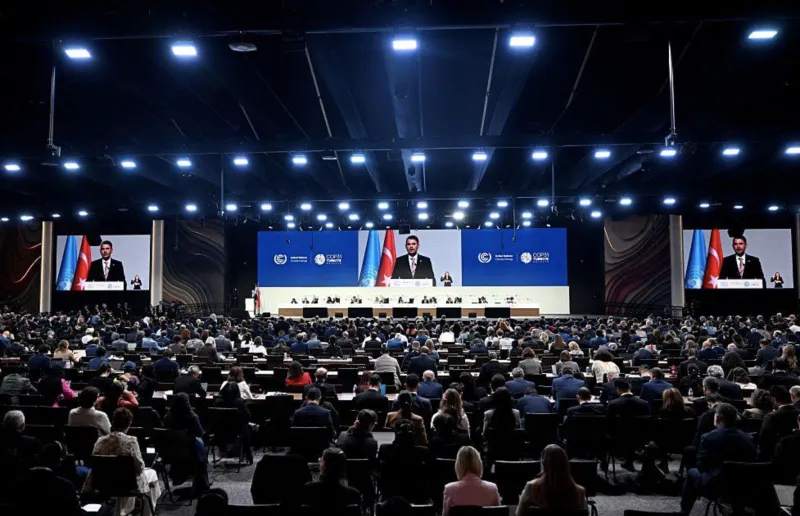
COP31, held in Antalya, Türkiye, from 9–22 November 2026, was expected to be an important moment for translating climate commitments into action. Instead, it became a reminder of just how difficult global climate cooperation can be.
After more than two weeks of negotiations, the summit ended without agreement on its proposed overarching political outcome, the Antalya Pact. Disagreements over fossil fuels, climate finance and the ambition needed to address global warming proved too difficult to resolve.
Yet, beyond the diplomatic disappointment, there were developments worth paying attention to. Here are five.
1. The Antalya Pact collapsed. Consensus, apparently, is still a work in progress
The biggest headline was the failure to adopt the Antalya Pact. Countries could not agree on how strongly to address fossil fuel dependence, the growing risk of exceeding the 1.5°C warming threshold and the financing needed by developing countries.
The European Union and several vulnerable nations rejected the proposed text, arguing that it lacked sufficient ambition.
The irony? After 31 climate conferences, the world still struggles to agree on the basic ingredients of climate action: who reduces emissions, who finances the transition and who takes responsibility.
2. Fossil fuels remained the elephant in the negotiating room
One of the biggest sticking points was the absence of an explicit commitment to transition away from fossil fuels in the proposed final agreement.
While countries continued to advance renewable energy and electrification initiatives, they could not agree on a clear political roadmap for moving away from coal, oil and gas.
There was some progress outside the main negotiations, including new national transition roadmaps and an electrification initiative supported by countries representing a significant share of the global economy.
The message is clear: countries are increasingly comfortable discussing the energy transition, provided the conversation does not become too uncomfortable for fossil fuel producers.
3. Adaptation progressed, but financing remains the million-dollar question.
For climate-vulnerable countries, adaptation is not a theoretical exercise. It is about protecting farmers, securing water supplies, restoring degraded land and strengthening communities against droughts and floods.
COP31 advanced the Global Goal on Adaptation by agreeing on arrangements to refine the 59 indicators adopted at COP30. Countries also made progress on the Adaptation Fund's arrangements under the Paris Agreement.
However, disagreements over adaptation finance, accountability and the delivery of existing commitments remained unresolved.
For Africa, this matters enormously. The continent cannot build climate resilience on indicators, frameworks and technical guidance alone. It needs accessible financing and investments that reach communities.
Measuring the problem is important. Financing the solution would be even better.
4. Just transition received another three years. Implementation will have to keep up
Countries agreed to extend the Just Transition Work Programme for another three years, recognising the importance of ensuring that the shift towards low-carbon economies is fair and inclusive.
The discussions covered employment, energy access, workers' rights and the economic implications of the transition.
However, countries could not resolve the operational arrangements for the Just Transition Mechanism, postponing further decisions until COP32.
For Africa, a just transition must go beyond reducing emissions. It must support industrialisation, create jobs, expand energy access and strengthen economic opportunities.
After all, a transition that leaves communities without affordable energy or alternative livelihoods is hardly a just one.
5. The next Global Stocktake will test whether countries are delivering
The Paris Agreement's Global Stocktake provides an opportunity to assess collective progress on emissions reductions, adaptation and climate finance.
The next stocktake process will be particularly important as countries confront the growing gap between their climate commitments and actual implementation.
The challenge is no longer simply setting targets. It is ensuring that governments deliver on them and that progress can be measured.
The world has accumulated enough climate pledges to fill several conference halls. What it needs now is evidence of implementation.
What does COP31 mean for Africa?
For Africa, the outcomes reinforce three priorities.
First, climate finance must move beyond political promises towards predictable and accessible investment in adaptation, agriculture, water and resilient infrastructure.
Second, Africa must shape its own just transition agenda, ensuring that energy security, industrialisation, employment and food security remain central to climate policy.
Third, the continent needs a stronger implementation agenda ahead of COP32 in Addis Ababa, Ethiopia, in 2027. African countries must arrive with coordinated priorities that connect climate ambition with investment, technology transfer and economic transformation.
The final word
COP31 was not without progress. Important technical decisions were secured, and countries continued advancing initiatives outside the formal negotiations.
However, the failure to agree on the Antalya Pact exposed a deeper problem: global climate ambition continues to move faster than political cooperation.
For Africa, the priority should be ensuring that the next round of negotiations delivers more than another collection of declarations.
Because, after 31 COPs, the world has become very good at negotiating the future of the planet. It is time to get better at protecting it.
The planet is not waiting for consensus.